
How to Get Your First Fix and Flip Loan With No Experience
You don't need a track record to get funded - and if your experience is more than three years old, we'll get you back in the game. Up to 90% of purchase price, 100% of your rehab budget, and DSCR rental loans starting at 640 FICO. Here's how to evaluate a deal, what we need to preapprove you, and what opens up after your first project.
You've been studying the market. You've run the numbers on a dozen properties. You've watched every wholesaler webinar and underwriting walkthrough on YouTube. You are handy and have a solid network of contractors. The only thing you haven't done yet is close a deal.
Or maybe you have - just not recently. You were active a few years back, life happened, and now you're ready to get back in. Most lenders count experience within the last three years. If your deals are older than that, you're starting over on paper.
Either way, you can start here.
Upright Lending funds first-time real estate investors on both rehab (fix-and-flip) and DSCR rental loans. No track record required. And if you're a returning investor whose experience has aged out of the three-year window, our zero-experience tier still gives you real leverage, up to 90% of the purchase price and 100% of your total rehab costs. That's not a watered-down starter program. That's competitive with what most lenders offer borrowers who have done dozens of deals.
You also get the same experience our repeat borrowers get: a dedicated team that stays with you from quote to close (no handoffs), locked terms & pricing that holds through the life of the deal, and a platform built to move fast so you're not chasing updates or wondering where things stand.
Here's what's available to you, how to evaluate a deal, and how to move quickly once you find the right project.
What's Available at Zero Experience
Rehab (Fix-and-Flip) Loans
Our team is ready to lend to first-time investors on light rehab and bridge purchases. Light rehab means the construction budget is under 50% of total project costs, with no use conversion or major square footage additions. That covers the majority of first flip projects: cosmetic renovations, kitchen and bath remodels, new flooring, paint, landscaping, and similar scope.
Here's what the leverage looks like for a borrower with zero completed projects:
- Up to 90% of purchase price (at 740+ FICO)
- Up to 90% of your total costs, meaning we fund 100% of your construction budget
- Up to 75% of after-repair value (LTARV)
- Loan amounts from $100K to $3.5M
- 6 to 24-month terms
For context, many lenders either won't fund first-time investors at all, or they'll cap you at 80-85% LTC and require significantly more cash out of pocket. At 90/90/75, you're getting leverage that most of our competitors reserve for experienced borrowers.
Bridge loans (purchase with no rehab) are also available at up to 75% LTV, which is useful for stabilized acquisitions or wholesale deals that just need a quick close.
One thing to know: heavy rehab (budgets over 50% of project costs, use conversions, or large additions) requires at least 4 completed projects, and ground-up construction requires 4-5 deals to start with full leverage kicking in at 6+. Light rehab also has absolute dollar thresholds; if your budget exceeds $250K, it may be classified as heavy regardless of the percentage. Your first deal should be a manageable scope, and that's actually good advice regardless of the lending rules.
DSCR Rental Loans
If you're buying a turnkey property to hold and rent, whether that's a single-family, a duplex, or a small multi-family, our DSCR program works for first-time investors too.
As a first-time investor, you'll see a 5% reduction from our standard LTV matrix. In practice, that means:
- Up to 75% LTV on purchases and rate/term refinances (vs. 80% for experienced investors)
- Up to 70% LTV on cash-out refinances (vs. 75%)
- Loan amounts from $75K to $3M
- 30-year fixed, 5/6 ARM, and 7/6 ARM options, with interest-only payment options
- Minimum DSCR of 0.75x on long-term rentals
That 5% LTV adjustment is the only difference between you and a borrower with 10 deals under their belt. Same products, same published rate sheet, same team. And because our pricing is published, not negotiated deal by deal, you'll know your rate before you submit an application. What's quoted is what's held.
One note: crossed-collateral loans (multiple properties on one note) require experienced investor status, so those aren't available on deal one. Short-term rental purchases are also not eligible, but STR refinances are, once you have a 12-month operating history.
What Opens Up After Your First Deal or Two
You don't stay in the starter tier for long. Here's what changes once you have a project or two behind you.
DSCR: The Experienced Investor Unlock
This is the biggest early milestone on the rental side. Our DSCR program defines "Experienced Investor" as someone who has owned two or more properties for at least twelve months during the most recent thirty-six month period, with at least one being income-producing. Once you meet that definition:
- Full matrix LTV: up to 80% on purchases (up from 75%), 75% on cash-out (up from 70%)
- Crossed-collateral loans become available - multiple properties on one note, up to $5M (minimum 1.15x DSCR)
- No more 5% first-time investor LTV reduction
On a $400K rental purchase, that's the difference between $80K down and $100K down. And crossed-collateral opens up portfolio-level strategies that weren't on the table for deal one.
Even if you don't technically qualify as "experienced" yet - say you've done two flips but haven't held a rental for 12 months - knowing the milestone helps you plan. Holding your next deal as a rental instead of flipping it could be the move that unlocks the full matrix.
Rehab: Same Strong Leverage, Building Toward Tier 2
Our short-term lending programs group experience into three tiers: 0-3 completed projects, 4-7, and 8+. At 1-2 deals, you're still in the 0-3 tier, which means your leverage on light rehab and bridge stays the same; 90/90/75. That's still more aggressive than what most lenders offer their seasoned borrowers.
Here's what opens up as you build your track record:
- At 4 completed projects: Heavy rehab becomes available (larger scopes, use conversions, major additions). Ground-up construction (GUC) opens at 4-5 deals with up to 85% LTC and 70% LTARV. The 0.25% Tier 3 pricing add-on drops off.
- At 6+ projects: Full construction leverage kicks in - up to 90% LTC on budgets under $500K.
- At 8+ projects: Tier 1 pricing - a 0.25% discount off the base rate.
Document Everything
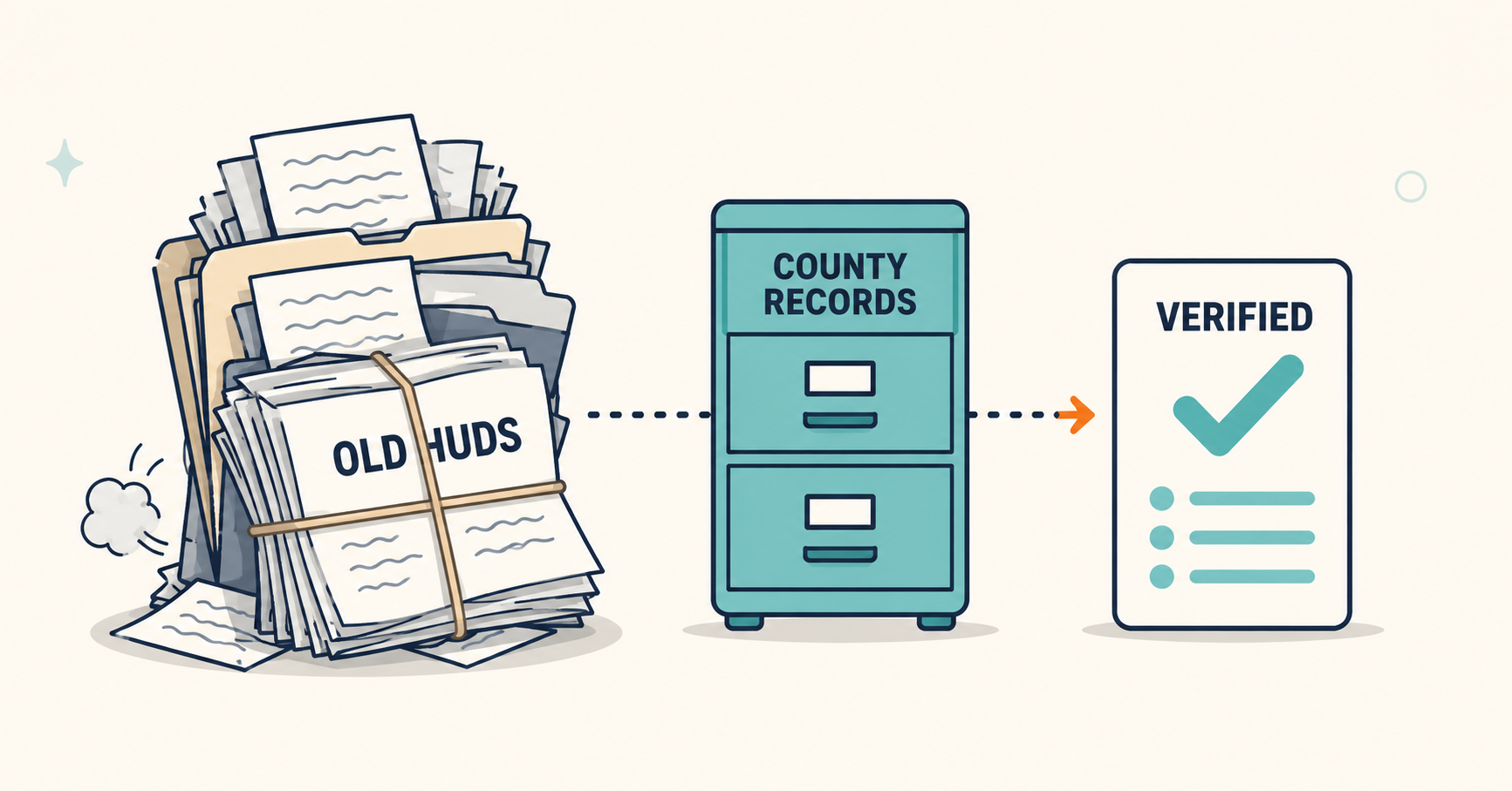
This matters more than most investors realize. Every completed project you can prove with HUD settlement statements, before/after photos, contractor invoices, final sale or lease-up records, etc. builds your experience file. The paper trail is what moves you from one tier to the next. Keep it clean from day one, and you'll get full credit for your work when it's time to tier up.
If you're recycling capital from your first deal into the next one, make sure those funds are deposited and seasoned for 60 days before you need them. Cash-out proceeds from a DSCR refinance can count toward reserves on your next deal, a useful strategy for scaling without bringing new capital every time.
How to Identify a Good Deal
Lending guidelines set the boundaries, but the deal itself is what gets you funded. Before you go under contract on anything, you need to know whether the numbers actually work. Here's how to evaluate a project for each product.
Fix-and-Flip: Understanding the Three Leverage Metrics
When we underwrite a rehab loan, we're looking at three numbers simultaneously, and your loan amount is capped by whichever one is most restrictive:
LTP (Loan-to-Purchase Price): The percentage of the purchase price we'll lend. At zero experience with a 740+ FICO, that's up to 90%. So on a $200K purchase, we'd lend up to $180K toward acquisition.
LTC (Loan-to-Cost): The percentage of your total project cost (purchase price plus rehab budget) that we'll finance. At up to 90% LTC, we're funding 100% of the construction budget on top of the acquisition loan. If you buy for $200K and your rehab budget is $60K, your total cost is $260K, and we'd lend up to $234K.
LTARV (Loan-to-After-Repair Value): This is the ceiling. Your total loan can't exceed 75% of what the property will be worth when the work is done. This is the metric that keeps the deal honest - if the ARV doesn't support the purchase and rehab, the project doesn't pencil.
In practice, LTARV is usually the binding constraint. That's by design. It forces every deal to have enough margin between total cost and finished value to protect both you and the lender. We want you to do profitable projects. We win when you win.
Fix-and-Flip: Running the Profitability Math
A good flip should target at least 20% profit on your all-in costs. Your all-in cost includes the purchase price, rehab budget, carry costs (interest payments, taxes, insurance & utilities during the project), and closing costs on both the buy and sell side. Here's how to back into the numbers depending on what you know:
You know the ARV and the purchase price - what's your max rehab budget? Say comparable sales tell you the finished property is worth $350K, and you're under contract at $200K. Your all-in cost needs to stay at or below roughly $290K to hit a 20% margin ($350K / 1.20 = ~$292K). Subtract the purchase price ($200K) and estimated carry and closing costs (budget 10-12% of ARV, so roughly $35-42K), and your rehab budget ceiling is around $50-55K. Now check the lending side: total loan at 75% LTARV = $262.5K. That covers the $200K purchase plus the $55K rehab with room for the structure to work.
You know the purchase price and rehab cost - what ARV do you need? If you're buying at $180K with a $70K rehab, your total project cost is $250K. Add carry and closing costs (estimate $30-40K) and you're all-in around $285K. To hit 20% profit, you need an ARV of at least $342K ($285K x 1.20). Pull comps. If the neighborhood doesn't support that number, the deal doesn't work, regardless of what the lender will approve.
You know the ARV and rehab cost - what should you pay? ARV is $300K, rehab is $50K. To net 20% profit, your all-in cost needs to be $250K or less. Subtract the rehab ($50K) and estimated carry/closing ($32-36K), and your max purchase price is roughly $165K. That's your offer ceiling.
The common thread: start with the ARV, work backward, and make sure the margin is real before you sign anything. Deals that look good on the purchase price but don't have the spread to support the rehab and carry costs are the ones that get first-time investors into trouble.
DSCR Rental: Two Questions That Tell You Everything
Evaluating a rental deal comes down to two questions:
Can you afford the down payment? As a first-time investor at 75% max LTV, you're bringing 25% down plus closing costs and reserves. On a $300K purchase, that's $75K down, plus roughly $5-8K in closing costs, plus 3 months of PITIA in reserves (typically $4-6K). Budget $85-90K in total cash needed.
Does the rent cover the payment? This is the DSCR (Debt Service Coverage Ratio) calculation. Take the property's gross monthly rent and divide it by PITIA - that's Principal, Interest, Taxes, Insurance, and any Association (HOA) fees, combined into a single monthly number.
DSCR = Gross Monthly Rent / Monthly PITIA
A ratio of 1.0x means the rent exactly covers the payment. You break even on cash flow before maintenance and vacancy. Above 1.0x means positive cash flow. We'll go as low as 0.75x on long-term rentals, but deals below 1.0x require 6 months of reserves instead of 3, and the pricing is better the higher your DSCR goes.
Here's a quick example: You're buying a single-family rental for $250K, putting 25% down ($62.5K). Your loan is $187.5K. On a 30-year fixed at, say, 7%, your monthly P&I is roughly $1,248. Add $250/month for taxes, $125 for insurance, and you're at about $1,623/month PITIA. If market rent is $1,850, your DSCR is 1.14x. That's a solid deal. If market rent is only $1,400, your DSCR is 0.86x. Still fundable, but you'll need more reserves and you're cash-flow negative until rents grow. Is that an expense you are willing and able to carry?
For both products, know your market before you make an offer. Pull comparable sales (for rehab) or rental comps (for DSCR). Have a contractor lined up for rehab projects and a property manager identified for rentals. Deals that are well-researched get funded. Deals that are just well-intentioned don't.
Set Up Your Entity
You'll borrow through a legal entity, typically an LLC, though LPs, trusts, and corporations also work. We recommend setting up a single-purpose entity (SPV) for each project. It keeps your liability contained and your accounting clean, and it's standard practice among experienced investors.
The guarantor (that's you, personally) must control at least 50% of the borrowing entity. Here's what you need to have in place:
- Articles of Organization filed with your state
- Operating Agreement (or partnership agreement / bylaws)
- EIN from the IRS
- Certificate of Good Standing (if the entity is more than 12 months old)
If you haven't formed your entity yet, that's fine. An LLC takes a few days in most states. Your real estate attorney or CPA can help you structure it correctly. Just don't wait until you're under contract to start this.
Verify You're Ready: Credit, Background, and Liquidity
This is what we check on the borrower side before we'll preapprove you. None of it is unusual; get it in order ahead of time and you'll save weeks when a deal comes together.
Credit: Minimum 680 FICO for rehab loans, 640 for DSCR. We pull a merged report from at least two bureaus. No bankruptcies, foreclosures, or short sales in the last 3 years. No felony convictions. No outstanding liens or unpaid judgments. Clean mortgage history; no more than one 30-day late in the past 12 months.
Background: Standard third-party fraud detection and background check on every loan; it covers borrower validation, SSN verification, and criminal records.
Liquidity: You need cash on hand for your down payment, closing costs, and reserves. We verify with your two most recent monthly bank statements. For rehab, reserves include ~15 - 20% of the rehab budget plus 6 months of carrying costs. For DSCR, it's 3 months PITIA on loans under $1.5M, or 6 months on larger loans and any deal with a DSCR below 1.0x. Retirement accounts count at 60% of value with proof of full access. Gift funds can cover up to 50% of down payment and reserves. Lines of credit and HELOCs do not count.
What to Expect After You Submit
This is where most first-time borrowers have the most questions; not the guidelines, but what actually happens once you hand us a deal. Here's the process, step by step.
- You submit your deal through our platform. Upload your purchase contract, rehab budget (for fix-and-flip) or lease (for DSCR if occupied), along with your entity docs, bank statements, and credit authorization. Everything goes through our online portal. No emailing PDFs back and forth, no wondering whether your documents were received. You'll see the status of every item in real time.
- Your team picks it up and stays with you. The team who reviews your file is the same person who walks you through underwriting and coordinates your close. There's no handoff to a processing department, no re-explaining your deal to someone new halfway through. This matters more on your first deal than any other, because you'll have questions, and you'll get answers from someone who actually knows your file.
- We order the as-is (and after-repair for rehab) valuations and title. Valuations and title work are coordinated on our side through approved vendors. You don't need to source an appraiser or shop for title; we handle that, and work with vendors that move quickly. If you can only get into a property once, please let us know before you go! We'll send you a link to take your own photos that qualifies as the only inspection we'll need in order to fund your loan!
- Your rate locks at application. Our pricing is published and transparent. The rate you're quoted when you submit is the rate you close at, so long as there are no changes to your values, expenses, or rents. Should this happen, we'll talk you through it right away. Our standard lock is 30 days, with extensions available if you need them. You'll never get to the closing table and see a number you didn't expect.
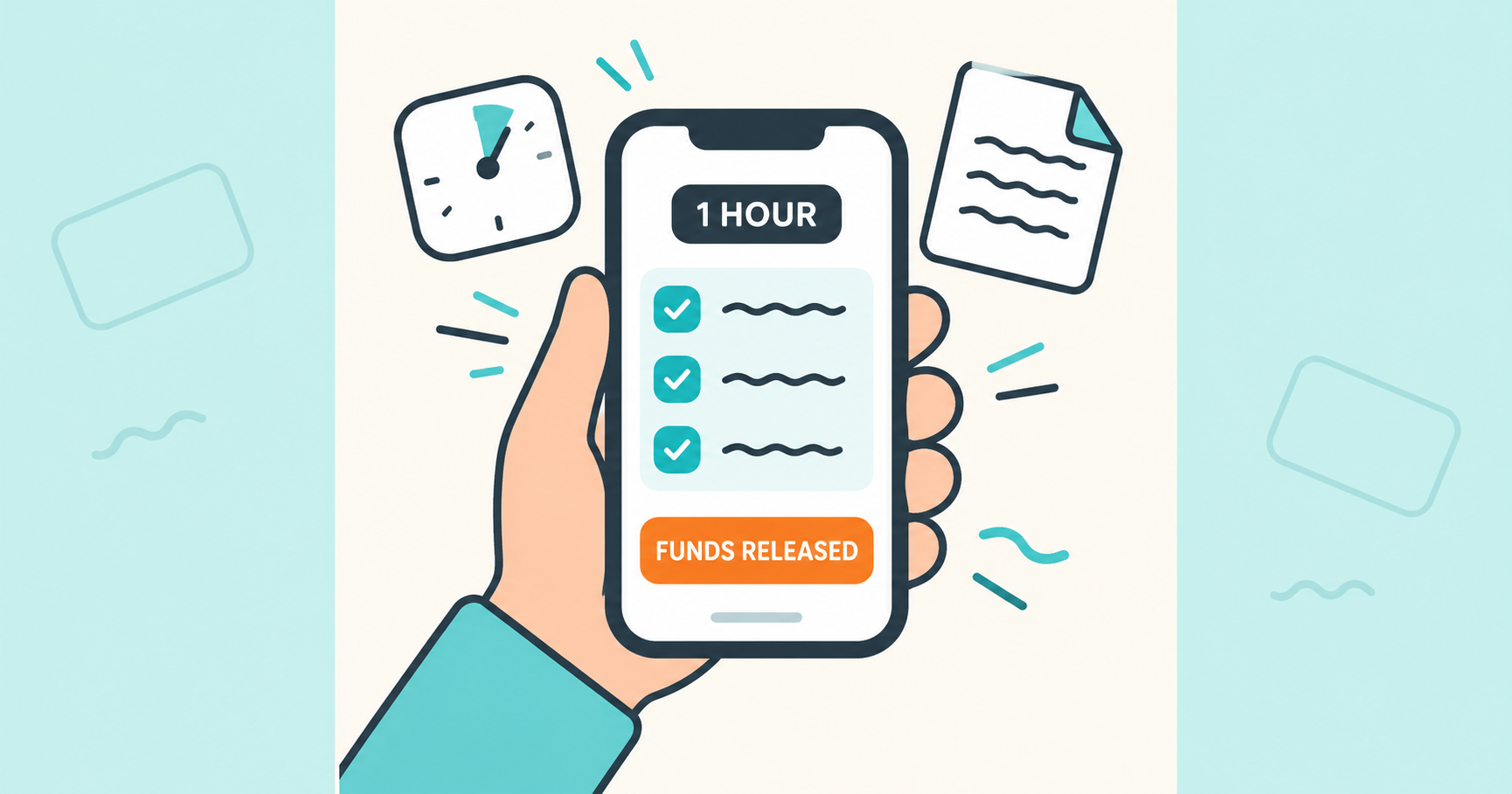
- For rehab loans: how draws work. At closing, you receive your Initial Advance. That's the funding towards your purchase acquisition. Your rehab budget is held back and disbursed as you complete work. As you finish phases of the project, you request a draw, we send you or your team a link to take photos (or send an inspector to verify the work if you prefer), and funds are released via a wire sent directly to you; typically, this entire process takes 2 business days. Your team will walk you through the draw schedule before you close so there are no surprises.
- For DSCR loans: you close and start collecting rent. DSCR closings work like a conventional purchase; you close, the loan funds, and you own a cash-flowing rental property. If the property is already occupied with a lease in place, income starts immediately. If you're leasing it up after close, you'll have your reserves to cover carry costs during the transition.
Timeline: With a complete file, we move from application to closing in under two weeks. The most common delay on first-time deals isn't underwriting; it's incomplete submissions. Get your docs together before you go under contract, and the process moves fast.
Get Started
- Get prequalified. Call us at (216) 206-6079 or create an account at uprightlending.com. We'll review your credit, liquidity, and entity setup so you know exactly what you qualify for before you make an offer.
- Find your deal. Use the leverage guidelines and profitability math above to evaluate properties. Know your ARV (rehab) or rental income (DSCR) before you go under contract.
- Submit a complete package. Entity docs, bank statements, purchase contract, and budget or lease. Upload everything through the portal. The cleaner the file, the faster the close.
Your first deal is the hardest one to get funded. Not because the guidelines are restrictive, but because everything is new. We've closed hundreds of first-time investor loans with the same competitive leverage, transparent pricing, and hands-on team you'll get on yours.
Bring us the deal. We'll get it done.
Already Experienced? Send A Friend Our Way.
If you're reading this as a seasoned investor, you probably know someone who's been talking about getting into real estate investing but hasn't pulled the trigger yet. Maybe it's a colleague, a friend at your REIA meetup, or someone in your network who keeps asking how you got started.
Send them our way. We fund first-time investors with the same leverage, pricing, and service that you get. If someone in your circle is ready to do their first deal, we'd rather they work with a lender who knows how to close it than one that's going to make the process harder than it needs to be.
Have them call (216) 206-6079 or point them to this article. We'll take it from there.
Ready to fund your next deal?
Partner with a lender who understands your investment strategy.
Subscribe to Our Blog
Get the latest insights, market trends, and investment strategies delivered to your inbox.