Run the numbers before you write the offer.
Save a property, run four calculators against it, and get one plain-language read on whether the deal works. Then carry the numbers straight into an application without retyping them.
Free with your account. No credit pull, no obligation to borrow.
The problem
Four calculators, four answers, no verdict.
You can find a flip calculator, a 70 percent rule calculator and a DSCR calculator on three different websites in about a minute. None of them know about the others, none of them remember the property, and none of them lead anywhere.
A verdict, in English
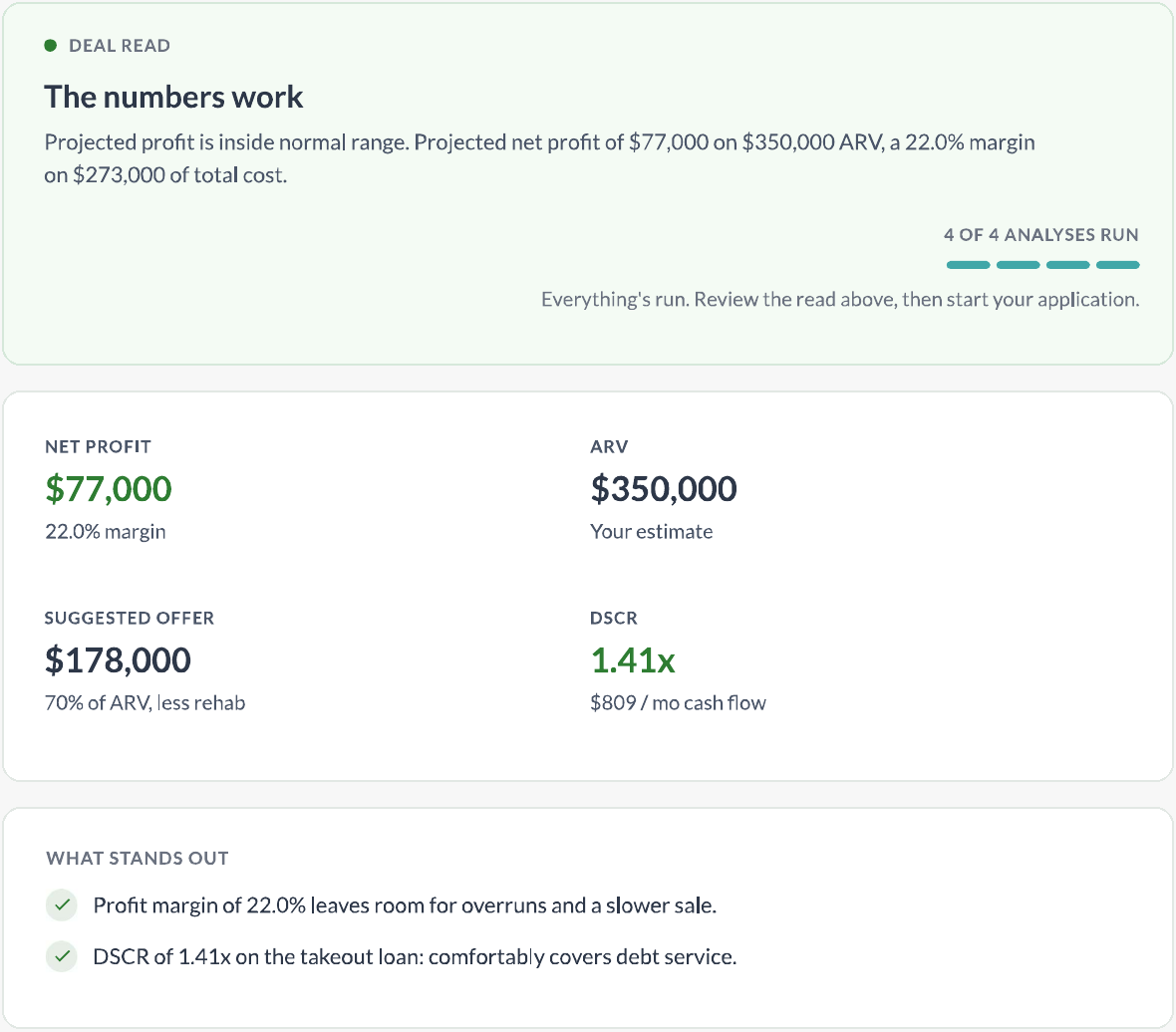
Deal Lab reduces the whole property to one line: the numbers work, workable with thin margin, or this deal needs work. Then it shows its working.
Type a number once
ARV, rehab budget, taxes and insurance flow between every calculator on the property. Change one and the rest move with it.
Straight into the application
When the read is good, Start Loan Application carries the address, purchase price, rehab budget and ARV with it. Nothing to re-enter.

Reverse solve
Work backwards from the profit you want.
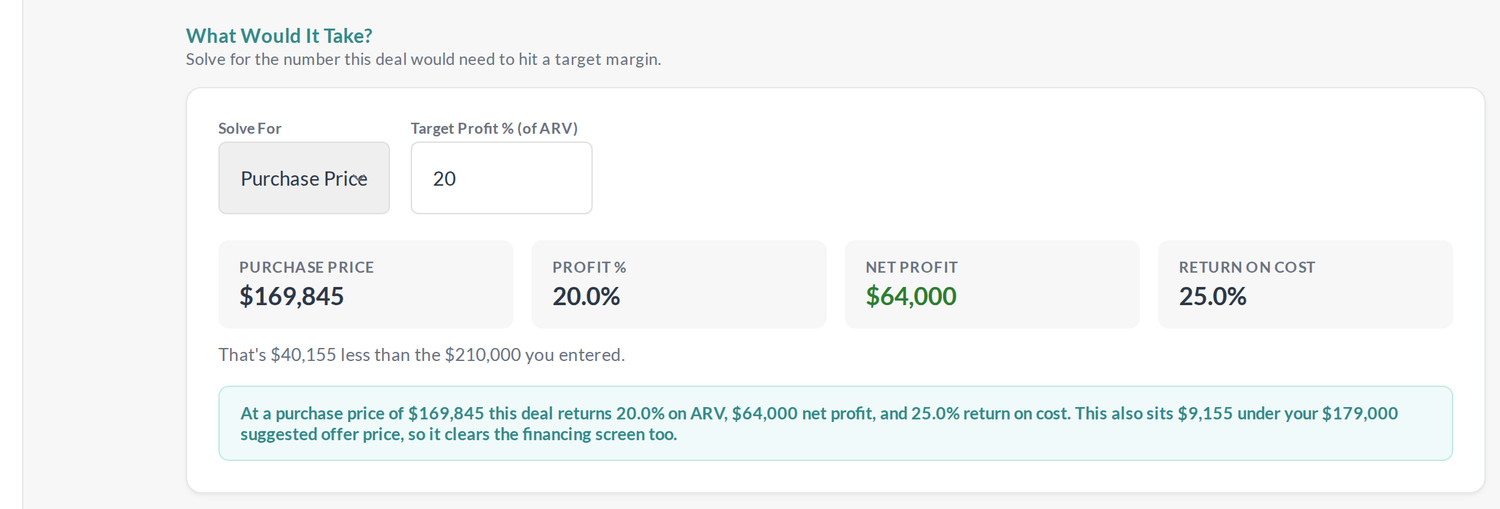
Most calculators make you guess a purchase price and see what falls out. Turn this on, name the margin you need, and Deal Lab solves for whichever number you are missing.
- Pick what to solve for. Purchase price, rehab budget or ARV. Fill in the other two and the third calculates live.
- Name your target. Profit as a share of ARV. Twenty percent to start, and yours to move.
- See the gap. It tells you how far the solved number sits from what you actually entered, so you know exactly how much room you have to negotiate.
- And whether we would fund it. If the answer pushes past our loan-to-ARV cap, it says so rather than letting you plan around a loan that does not exist.
Stress test
Find what breaks it, before it breaks.
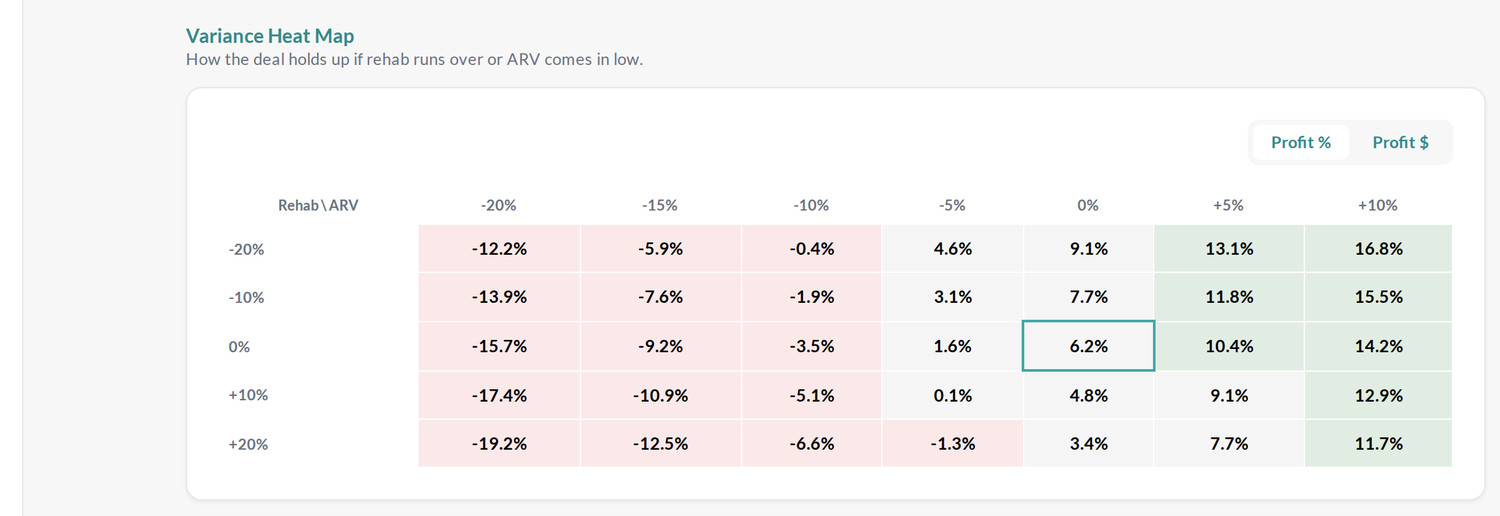
A single profit number tells you what happens if everything goes to plan. These two tell you what happens when it does not.
Rehab runs over. ARV comes in low.
The variance grid runs your rehab budget from 20 percent under to 20 percent over, against an ARV from 20 percent under to 10 percent over, and colors every cell. Your base case is outlined. You can see at a glance how much has to go wrong before the deal stops working.
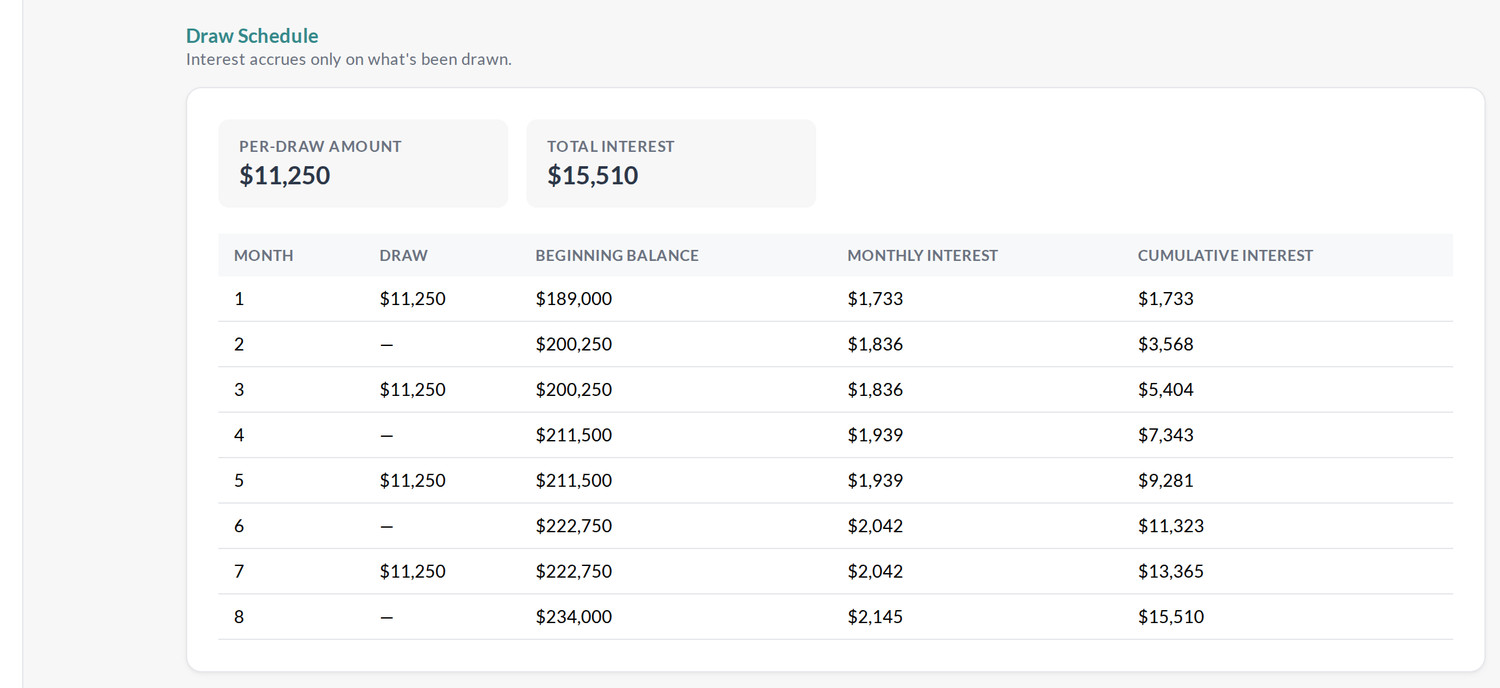
You pay interest on what you drew.
The draw schedule walks month by month: what is drawn, the balance, the interest that month and cumulative interest to date. Upright does not write Dutch-structured loans, so the schedule reflects the balance actually outstanding, not the full loan from day one.
The ceiling
Know your walk-away number before you bid.
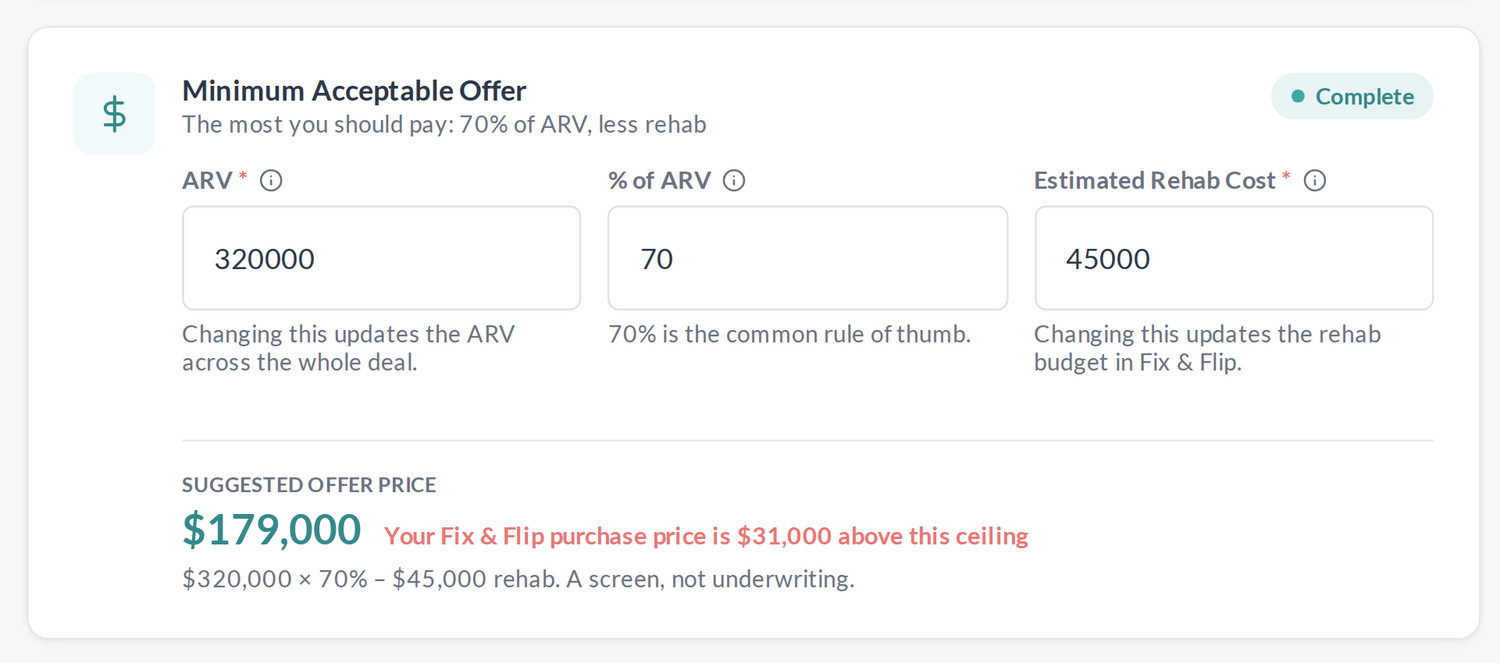
Minimum Acceptable Offer sits on the property overview, always visible, and recalculates as you type. Enter an ARV and a rehab estimate and you have your ceiling. Push your flip purchase price above it and the page says so, in red, on both screens.