
Bank-Owned Homes Are Back: How to Buy and Rehab an REO
Bank-owned homes are back on the market. Learn how REO sales work, what to bid with, and how to scope the rehab so your flip closes on time and on budget.
Completed foreclosures are climbing, and the homes they produce are landing on the market as REOs. Here is how bank sales work, what to put in your offer, and how to scope the rehab so the deal closes on time.
The listing went up on a Thursday. Three bedrooms, one bath, a 1950s ranch on a street you already know. The remarks were four words long: "Bank owned. Sold as is."
You walked it Saturday with a flashlight because the power was off. The kitchen was gutted, the water heater was gone, and there was a notice from the city taped inside the side door.
The listing agent told you offers were due Monday at noon, with proof of funds attached, and the bank wanted to close in 30 days.
That is an REO in 2026. The numbers can be very good. The deal goes to the buyer who shows up ready.
Why REOs Are Back on the Menu
REO stands for real estate owned. It is a home a lender took back through foreclosure and now holds on its books. Banks are not in the business of owning houses, so they list them to sell, usually through a local agent and the MLS.
Those listings are picking up. ATTOM's August 2026 foreclosure report counted 5,794 completed foreclosures, up 42% from a year earlier and up 22% from July. Volume is still below pre-pandemic levels, so this is a steady new source of inventory, not a flood. For an investor who wants more deal flow without paying a wholesaler's spread, that matters.
It also fits the broader market. With buyers facing mortgage rates above 7% and more homes for sale than at any point in a decade, the deals that work best are bought right on day one. If you have not read it yet, our post on planning for a shifting market covers how to rerun your exits at today's rates. REOs are one of the places to find that buy-right margin.
REO Versus a Foreclosure Auction
An REO is the stage after the auction. If no one bought the property at the foreclosure sale, it went back to the lender. That changes what you are buying.
The trade is simple. You give up some of the auction discount, and in return you get to walk the house, run title, and use financing.
How a Bank Sale Actually Works
A bank sale follows the same basic arc as any purchase, with a few house rules.
The listing agent runs the process
REOs are usually listed by an agent who works with the bank or its asset manager. That agent collects offers and sends them up the chain. Make the agent's job easy: use the local board's standard purchase form, send a clean package, and answer questions fast. The agent is your best source on what the bank cares about this week.
Your offer package is judged as a whole
The bank is comparing price, certainty, and speed. A slightly lower offer with strong proof of funds and a short close often beats a higher number that looks shaky. Keep contingencies to the essentials, such as inspection and title, and put up meaningful earnest money.
Expect a bank addendum
After the bank accepts, it typically sends its own addendum that overrides parts of your contract. Read every page. Bank addenda commonly limit seller disclosures, confirm the as-is sale, set firm closing dates, and can charge a daily fee if you close late. Know your closing timeline before you sign it.
The deed may be a special warranty deed
Banks often convey with a special warranty deed, which covers only the period the bank owned the home. That is one more reason to get a full title search and an owner's title policy at closing.
What to Have Ready Before You Bid
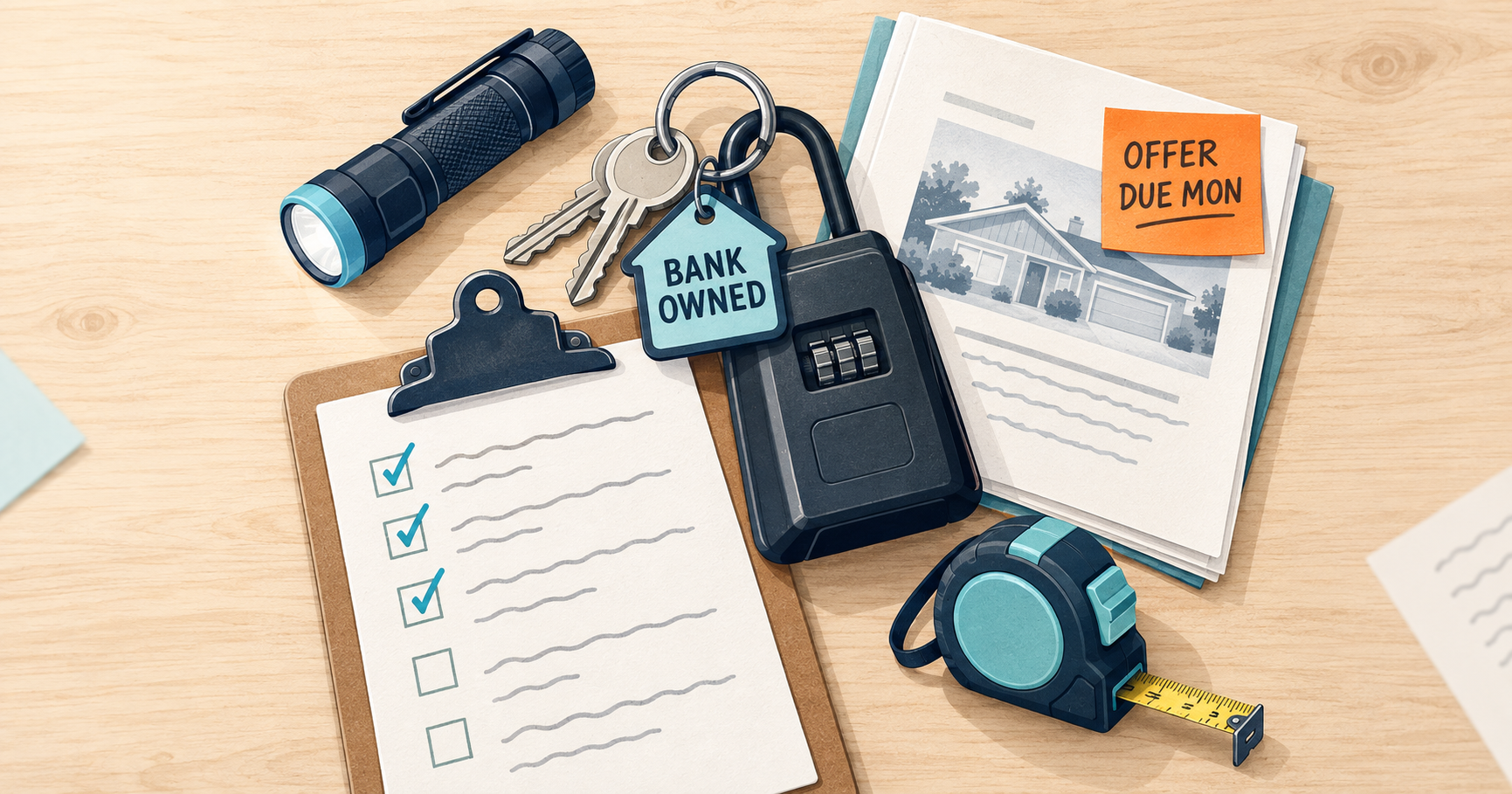
The investors who win REOs do most of the work before the offer goes in. This is the kit to have ready:
Only getting one walkthrough? Send us the address first. If the showing may be your only time inside, send your branch the address before you go. We'll text you a link for a virtual inspection. You walk the house with your phone, and everything you capture is geotagged and timestamped. On a rehab deal, that inspection can then be used for our valuation, so nobody has to go back out, not you and not us, and your file moves to closing faster.
If this is your first or second flip: an REO is a good way to learn because you can walk the house and get an inspection. Start with a lighter cosmetic property rather than the gut job, and lean on your branch to pressure-test the numbers.
Scoping the Rehab on a House That Sat Empty
Vacant bank-owned homes have their own patterns. They have often sat for months without heat, without anyone checking on them, and sometimes without the copper.
Plan for what you could not see
Utilities are often off at your walkthrough, so you could not run the water, flip the breakers, or fire the furnace. Ask the listing agent whether the bank will turn utilities on for your inspection. If it will not, budget as if those systems need work: plumbing (especially after a winter), electrical, HVAC, and the water heater. Check for moisture and mold, roof leaks, and missing fixtures.
Check what follows the property
Banks clear the mortgage, but some charges can survive a foreclosure. Ask your title company to check for unpaid property taxes, municipal code violations, water and sewer balances, and HOA dues. A city notice on the door can mean required repairs and a reinspection, so get the details before you finalize your budget. A lien that turns up late is far cheaper to handle before closing than after.
Build a scope that gets funded
Write your scope of work line by line, room by room, with a contingency for what the walls are hiding. Our guide to building a rehab budget that gets funded walks through the format. A clear scope also sets up your draws, so money arrives as the work is verified rather than all at the end.
How Upright Funds an REO Flip
An REO is a natural fit for a fix and flip loan, which is our RTL (Residential Transition Loan) for buying and renovating a property. One loan covers the purchase and the renovation:
- Financing: up to 92.5% LTC, so more of your cash stays available for the next deal
- Speed: closings as fast as 7 days, well inside a bank's typical 30-day window
- Rates: in the 9s
- Non-Dutch Interest: Only pay interest on the funds disbursed upfront and as draws are taken
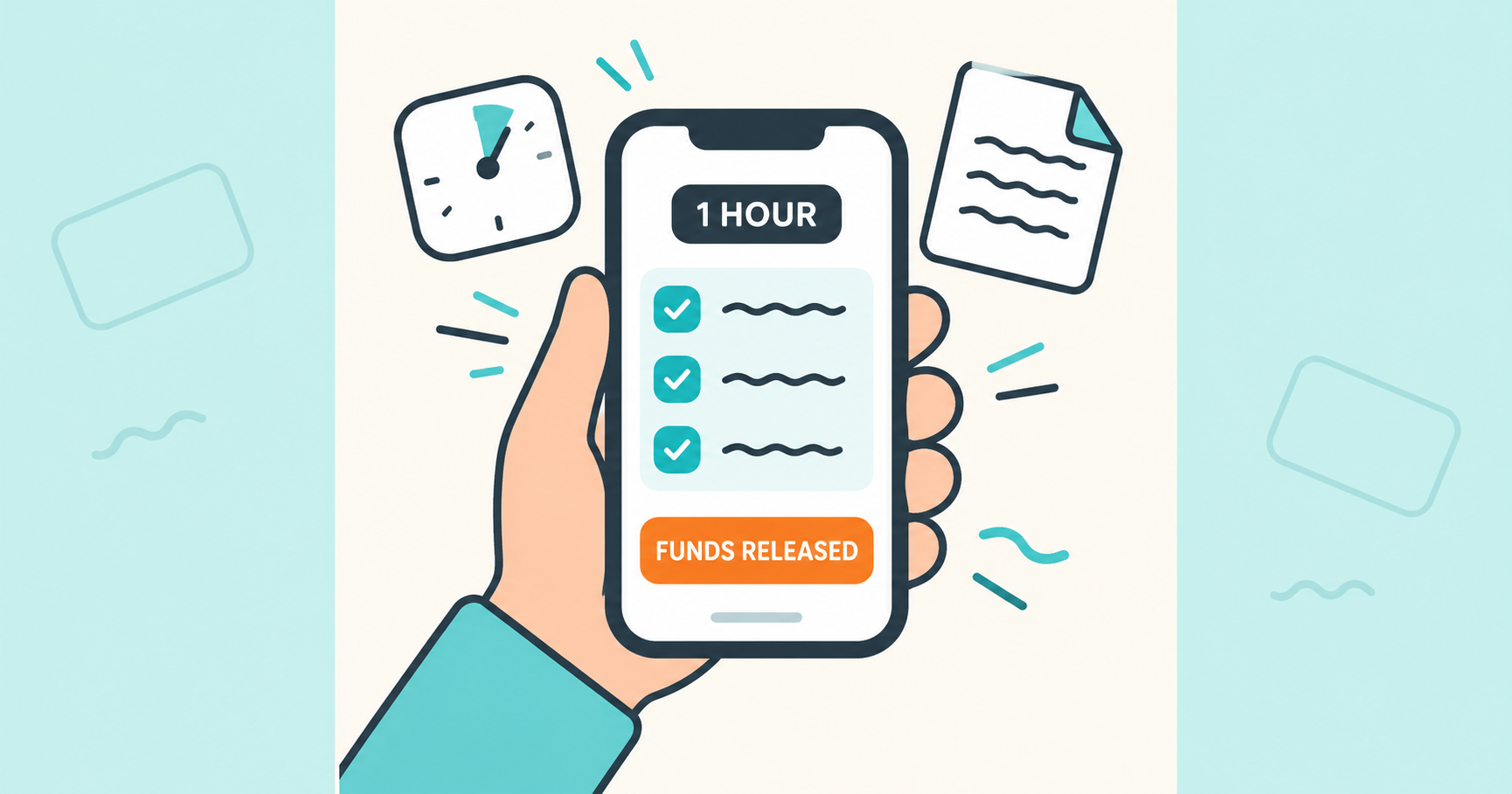
- Rehab funds: released through draws as work is completed, with the same branch from application to final draw
Speed matters more than usual here. A fast, certain close makes your financed offer compete with cash, keeps you clear of late-closing fees in the bank addendum, and starts your rehab clock sooner. Every week you are not paying holding costs on a vacant house is margin you keep.
If you run ten or more projects a year: REOs reward a repeatable system. Your branch already has your entity, insurance, and title contacts on file, so each new bank deal starts at the offer, not at the paperwork.
The Bottom Line
Bank-owned homes are coming back to market, and they let you buy with an inspection, clear title, and financing instead of cash at an auction. Win them by showing up ready: proof of funds, a financing plan, and a realistic scope for a house that sat empty. Upright funds the purchase and the rehab in one loan, closes as fast as 7 days, and gives you a dedicated branch that works the deal with you from offer to final draw.
Call (216) 206-6079 or start your application at uprightlending.com.
Found an REO worth bidding on? Start your application and send your branch the address today.
Ready to fund your next deal?
Partner with a lender who understands your investment strategy.
Subscribe to Our Blog
Get the latest insights, market trends, and investment strategies delivered to your inbox.